Annual Condo Property Inspection Guide for Boards & Managers (2026)
A practical annual condo property inspection guide to help boards and property managers document issues efficiently and plan maintenance. Learn how to prepare, record issues, organize findings, and common mistakes to avoid.
Spring rolls around and it’s time to walk the property and record maintenance issues for units and common elements. It was always one of the tasks I enjoyed most as a board member, but it can be time-consuming and ineffective if you don’t approach it properly.
Goals of the inspection
The goals of a property inspection are simple:
- Record new issues that developed since the last inspection
- Record issues with enough detail (text and images) so they’re actually useful when reviewed later
- If existing unresolved issues have changed since they were last recorded, update the issue to reflect the current state of the problem
- Categorize issues by location and type, so themes can be identified and you have context of where the problem is occurring
Easy, right? Maybe. Let’s dive into it.
Break up the work
At minimum we suggest all board members and the property manager participate in the inspection. As they say, many hands make light work. Not to mention the annual inspection is a good way to get new board members or PMs familiar with the property and its characteristics.
Break the work amongst the group into digestible chunks. Give two people units 1 through 20, another two people units 21 through 41, and so on.
Collect last year’s inspection notes so you’re not repeating yourself
There’s nothing more frustrating than repeating work that’s already been done. Many non-urgent maintenance issues will carry over from year to year.
Do your best to collect the maintenance issues from the previous year and reference them when doing your inspection. This can be one of the biggest challenges when using traditional tools like printed paper, Word documents, or spreadsheets. These tools do not make searching for precedent easy when out on the property.
Documentation best practices
The quality of your documentation determines how useful your inspection will be. Here’s how to do it right.
Write Detailed Notes
The description of the problem needs to be detailed enough to make it useful. At minimum, describe the problem and the specific location.
Bad note: “Crack in parging”
Good note: “12-inch crack in parging along the rear of the unit. No immediate concern but should be included in the next round of parging repairs.”
A picture is worth a thousand words
When possible, photograph issues you identify. This makes it easier to communicate the problem to other board members or contractors down the road.
When issues are recorded without images, they have a tendency to become vague puzzles when viewed a couple of months later. Photos and video reduce ambiguity.
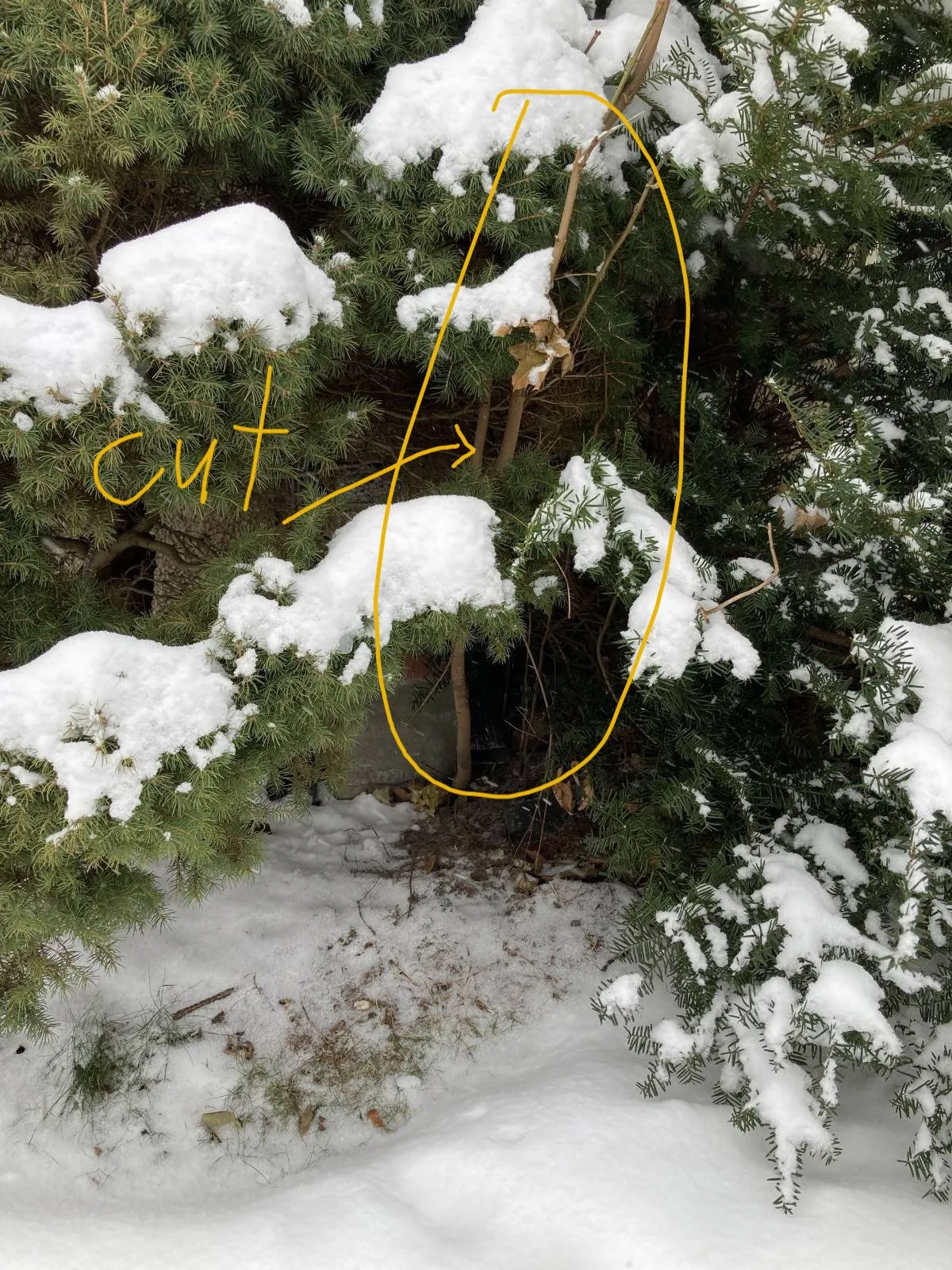
Annotate photos to make intent crystal clear
Categorize by issue type and urgency
For inspections to be truly useful, issues should be categorized by type and urgency so they can be grouped. Without categorization, it becomes nearly impossible to see the big picture.
Because condos operate at scale, you need the big picture so jobs can be properly batched. If 20 units require new caulk around their windows, you want to do that job once, not call the contractor 3 separate times because you couldn’t properly identify the total number of units that required caulking.
Share findings promptly and create an action plan
Circulate the inspection report to all board members within a week while observations are still fresh.
At the next board meeting, review the findings and prioritize issues according to urgency, risk to the corporation and owners, and available funds. You may have other variables to include in this calculation, so adjust accordingly.
- Prioritize the most urgent issues
- Identify projects for the current year
- Flag long-term items for future budget planning
Follow through
At the end of the repair season, collectively review and verify that identified issues were actually addressed. This is where many boards fall short; conducting the inspection but failing to ensure the work gets completed.
Common inspection mistakes to avoid
- Rushing through it: Block sufficient time; a thorough inspection takes several hours
- Going solo: Multiple sets of eyes catch more issues
- No photos: Take pictures! The context they provide is priceless
- Vague descriptions: “Fix the roof” isn’t actionable; “Replace damaged shingles on east side above unit 204” is
- No follow-up: The inspection is useless if findings aren’t acted upon
Simplify the process
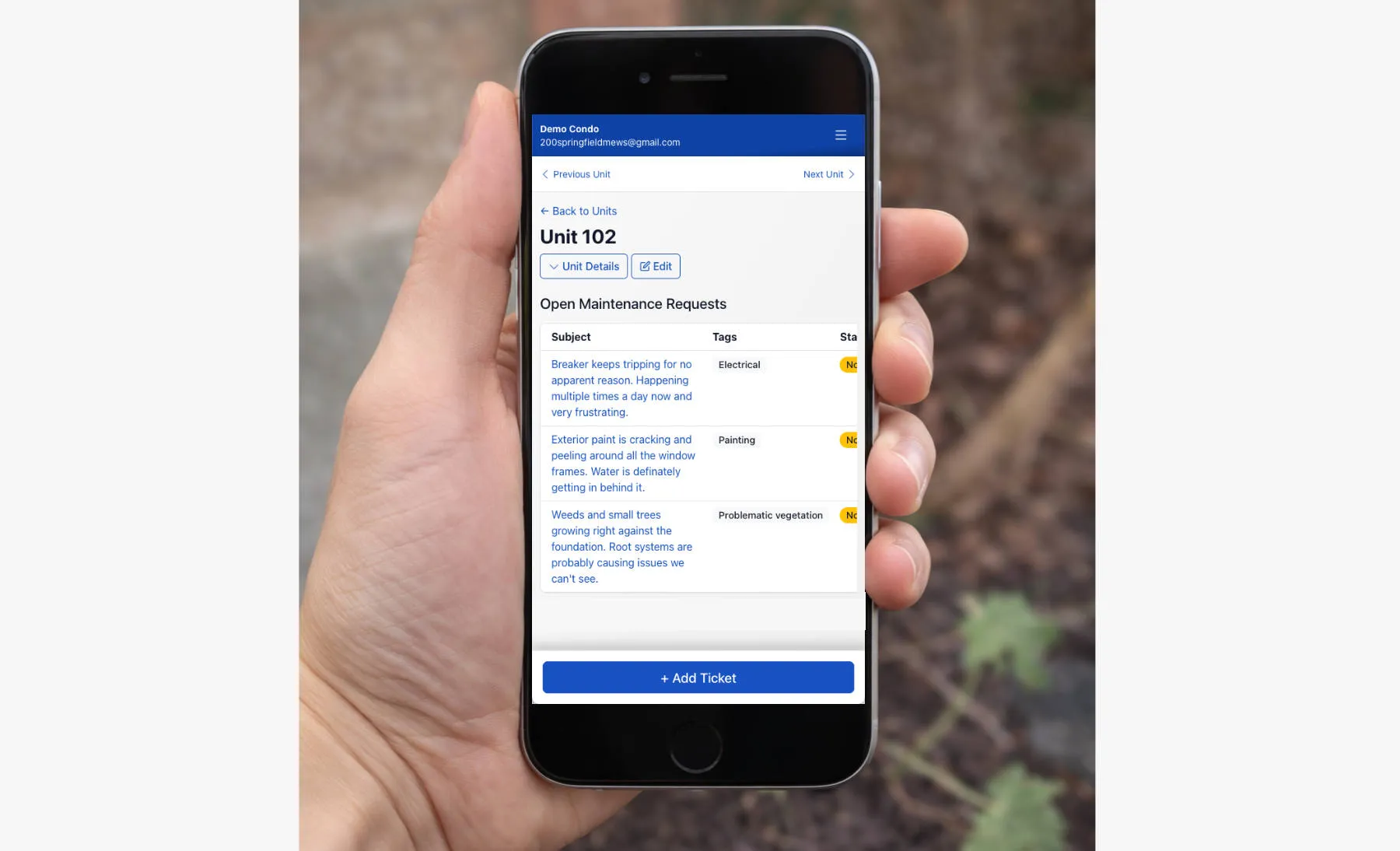
Modern tools like CondoWrangler make inspections far more efficient. Instead of juggling a notebook or faffing around with a word doc on your phone, you can:
- See a complete history of issues for a unit or common element, categorized by type, urgency, or status
- Use your phone to dictate observations rather than typing
- Take photos or video that automatically attach to the issue
- Annotate photos right from your phone to highlight problems
- Find historical records with ease; identify trends around recurring problems
- Avoid the nightmare of consolidating notes from different sources
- Share findings with the team immediately with easy-to-understand reports
CondoWrangler’s mobile app is optimized to cut inspection time in half, while producing higher quality output.
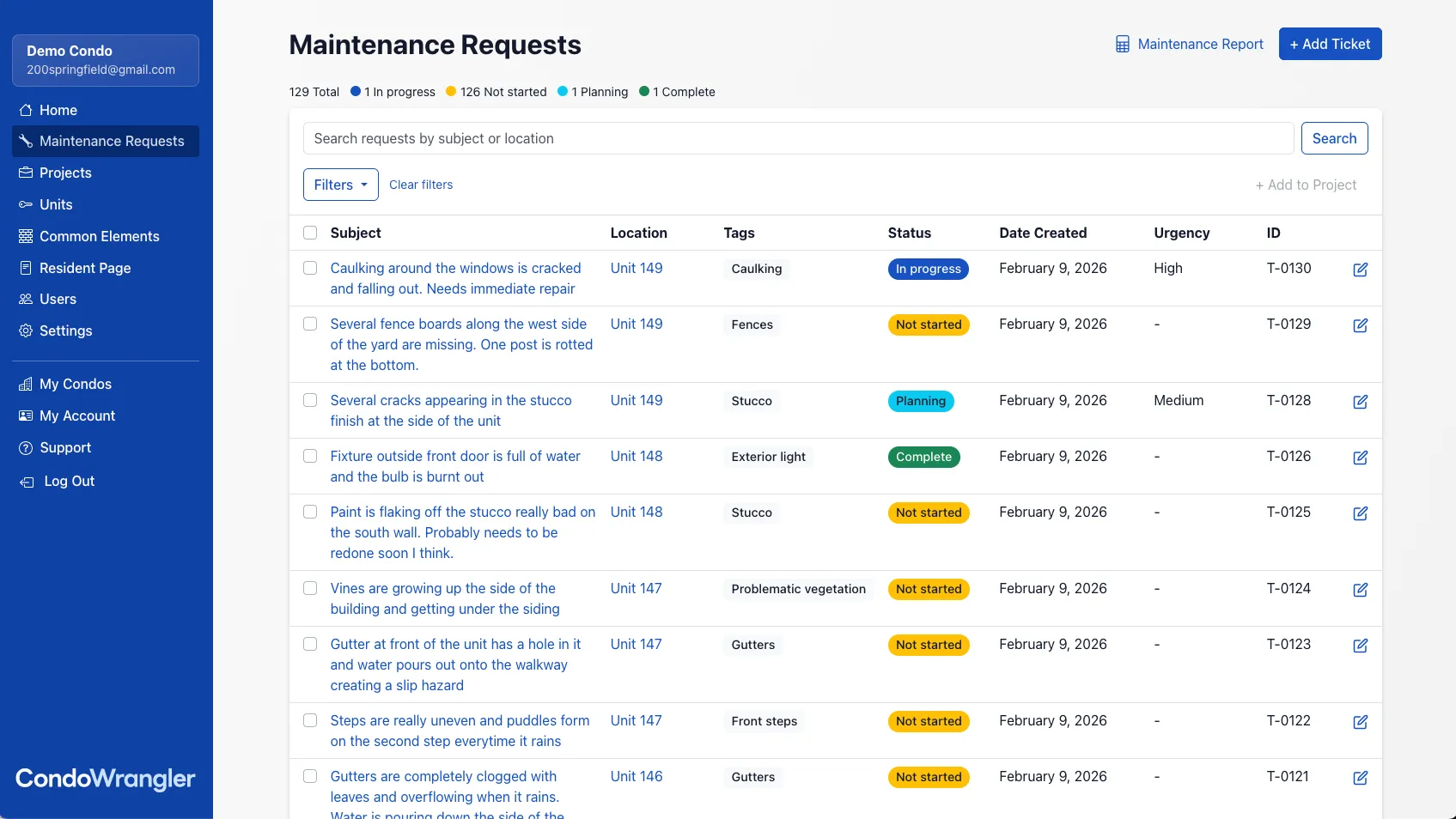
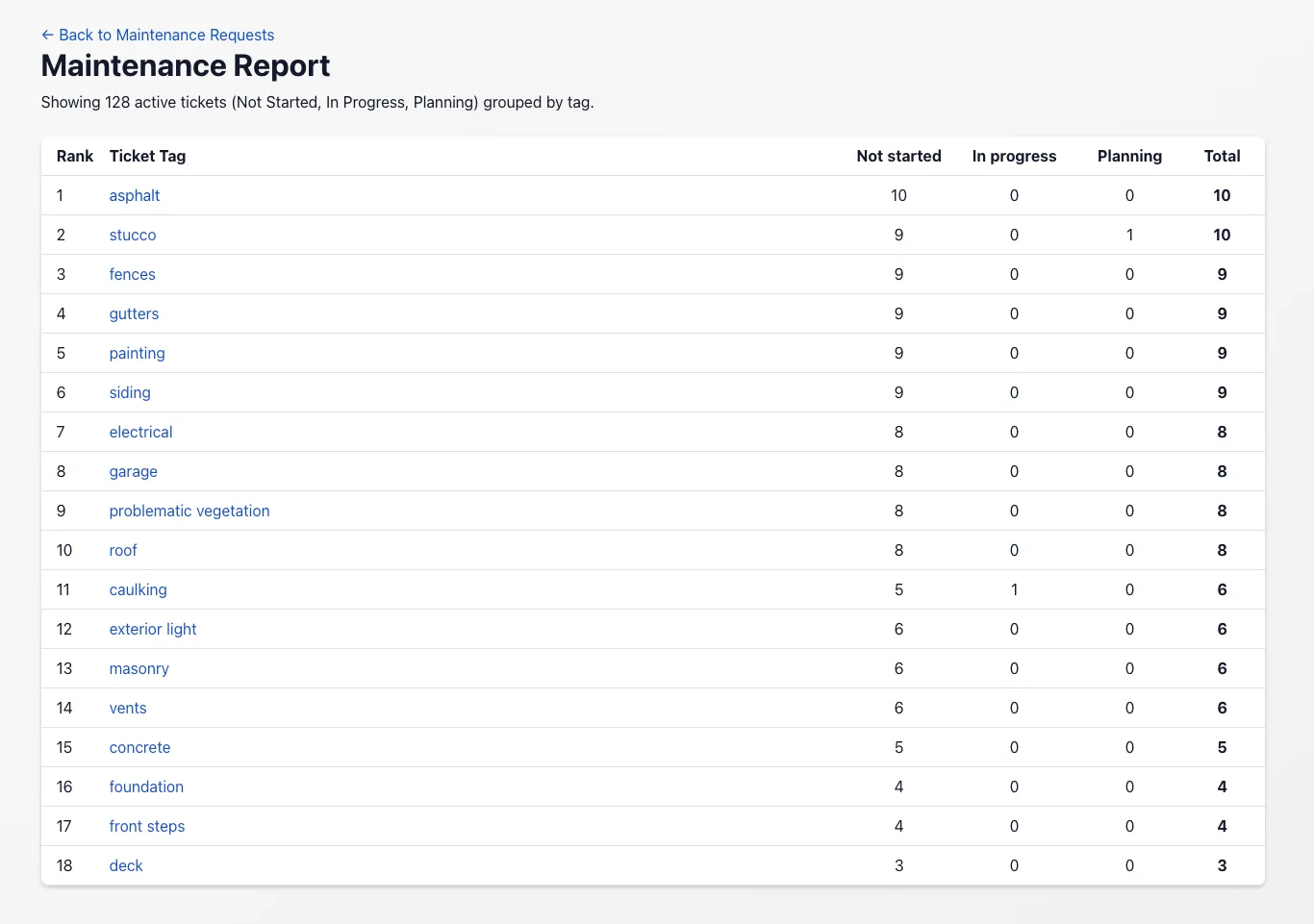
Maintenance reports make it easy to identify and group similar issues.
Final thoughts
An effective annual inspection is one of the best investments a condo board can make. The time spent identifying problems early saves money, prevents emergencies, and demonstrates diligent stewardship to residents.
Looking for an easier way to perform condo inspections? Request a demo to see how CondoWrangler takes the drudgery out of the process.